
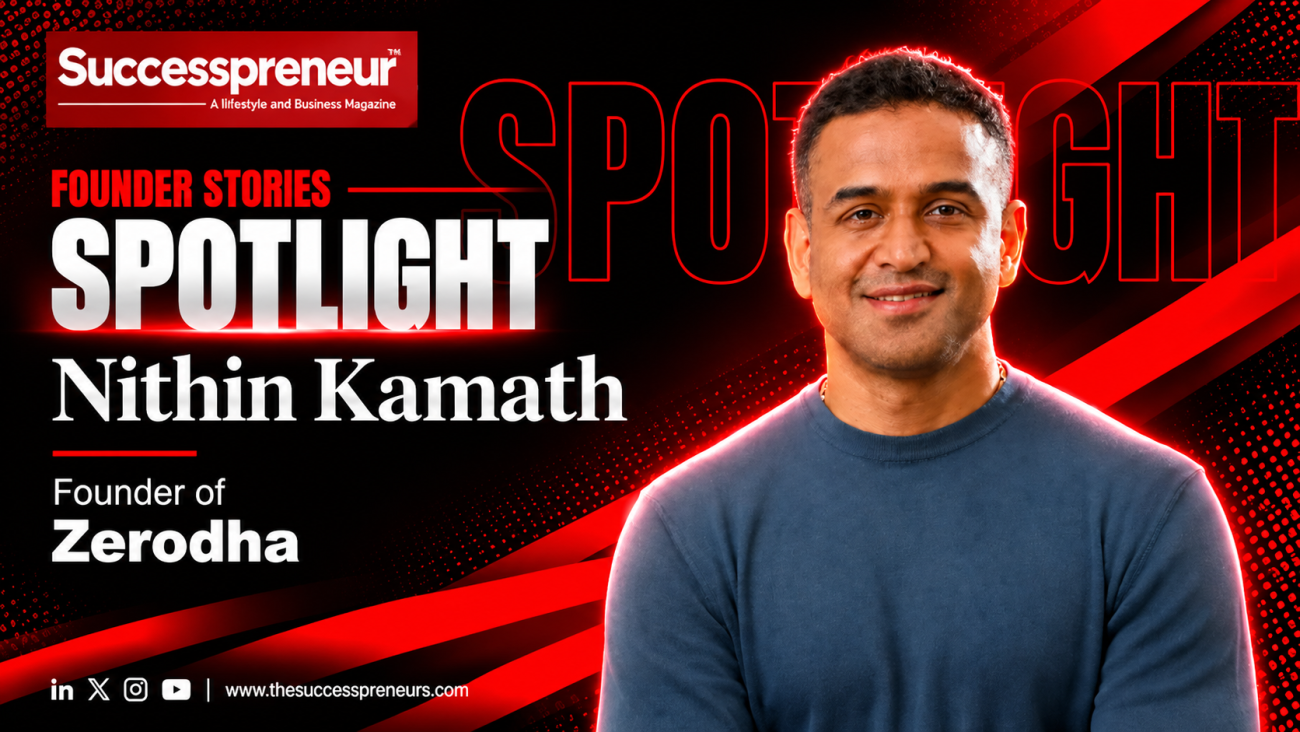
Nithin Kamath Net Worth: The Zerodha Founder Who Never Took a VC Cheque
Forbes, Bloomberg and Hurun all put a different number on the Zerodha founder. Here's what each one says, why they differ, and what's driving the wealth.
Estimates of Nithin Kamath’s wealth vary across major financial publications. Forbes valued him at around $4.7 billion, while Bloomberg placed the combined wealth of Nithin and Nikhil Kamath at $9.9 billion. Hurun estimated their combined wealth at ₹98,900 crore. These differences arise because each organisation uses different valuation methods and measures individual or combined wealth.
What Zerodha itself is worth
Zerodha's estimated valuation stood at ₹87,750 crore in 2024 before declining slightly to around ₹86,660 crore in 2025, according to Hurun reports. Forbes has also valued the company at nearly $8 billion. Since Zerodha is privately held and has not sold shares to outside investors, these figures are estimates rather than confirmed market prices.
The profit behind the number
Zerodha's valuation is supported by its strong profitability and growing customer base. The company reported approximately ₹4,237 crore in profit after tax in FY25 and around ₹4,300 crore in FY26. Despite relatively flat profits, its customer base has expanded significantly to more than 17.5 million clients, compared with just 30,000 in 2013.
What the founders actually take home
In 2021, Zerodha's board approved annual remuneration of up to ₹100 crore each for Nithin Kamath, Nikhil Kamath and Seema Patil. However, this was only the approved maximum limit, not their confirmed annual salary. There is no reliable public information on their current actual earnings.
No VC, and it shows
Zerodha has never raised external venture capital and remains closely controlled by its founders. This approach has allowed the company to grow through its own profits while maintaining ownership. Zoho is another Indian example of a successful bootstrapped business, with a Hurun valuation of approximately ₹1,03,760 crore.
What founders can take from it
Zerodha's journey shows that businesses can build substantial value without depending on venture capital. Maintaining profitability, controlling expenses and retaining ownership can help founders capture more of their company's long-term growth. It also highlights why private company valuations should be treated as estimates rather than exact figures.
The three things to remember
1. Nithin Kamath's estimated wealth varies across Forbes, Bloomberg and Hurun, depending on the methodology and whether his brother's wealth is included.
2. Zerodha's value is supported by consistent profits of around ₹4,300 crore and a large customer base.
3. Bootstrapped businesses can create significant founder wealth while retaining ownership, but private company valuations are never exact.
Add New Comment